7 Websites That Save You Money, and How Much to Expect
Websites that save you money, from free tax filing to prescription coupons, with honest savings estimates and the catch in each. Try one today.

Think of something you paid for last month: a prescription, a tax return, a gadget. At least one of these sites might have made it cheaper, and nobody would have told you.
These are seven websites that save you money in specific situations, each with what you might save, the catch and who should skip it. I haven't used all seven for this piece. The details come from each site's own pages and from the IRS and FTC, checked on 14 October 2026.
Quick answer: The best websites that save you money go after big, recurring costs: IRS Free File for taxes, GoodRx for prescriptions and ENERGY STAR's Rebate Finder for appliances. Google price tracking, Rakuten, Too Good To Go and Freecycle cover the rest. Savings vary, so each entry gives an honest estimate and a catch.

How were these websites that save you money chosen?
Each one passed three tests:
- It's real and checkable: an official or company page explains how it works.
- It targets a specific cost: a bill, a basket or a one-off purchase.
- The savings can be described honestly: without an invented total.
The catch: I give ranges only where a site or the IRS publishes numbers. Where nobody does, I say so rather than guess.
The 7 best money saving websites, ranked by situation
1. IRS Free File
Verdict: The biggest single saving here, if your income qualifies.
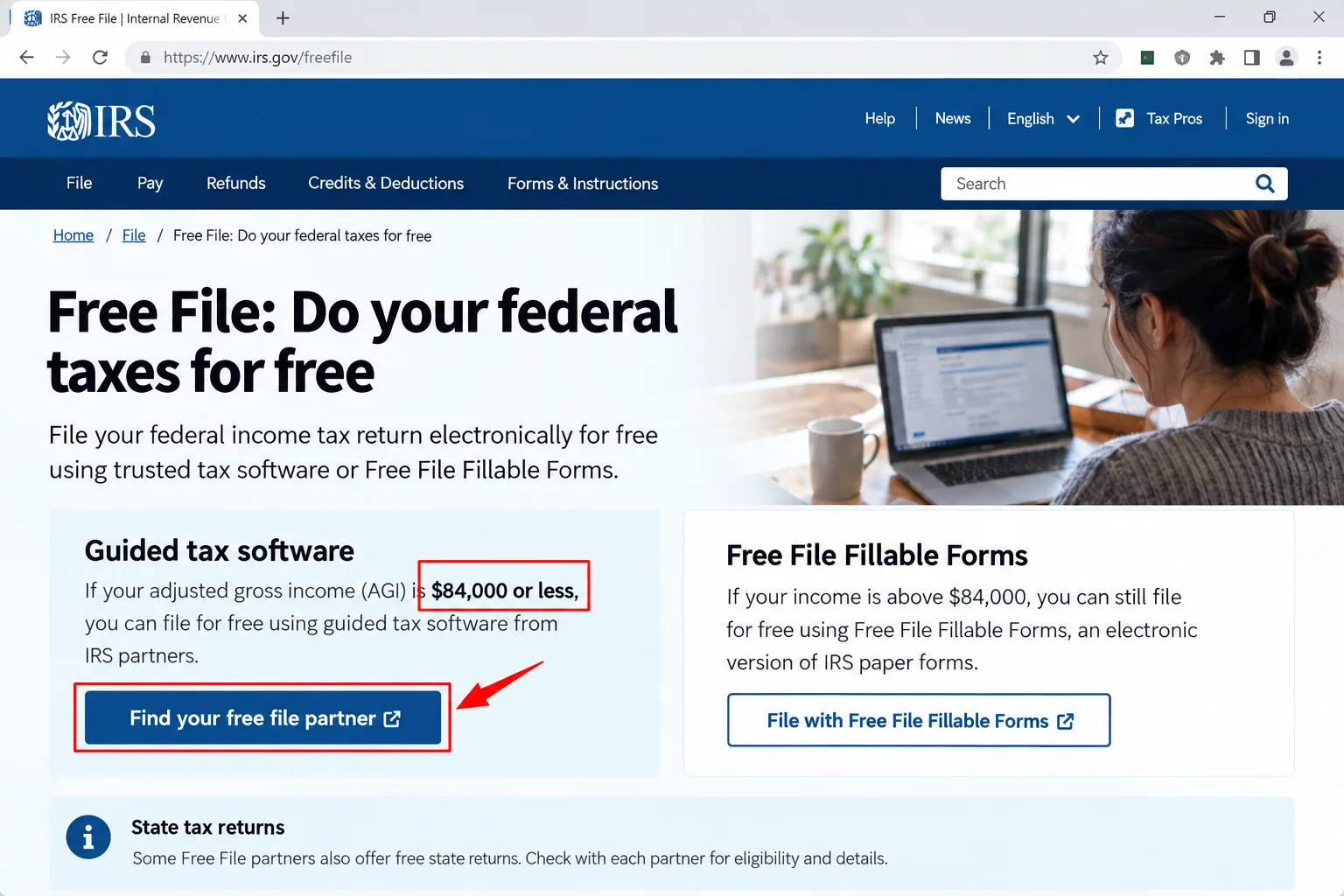
- What it is: the IRS page for free guided tax software says your adjusted gross income must be $89,000 or below. Above that, Free File Fillable Forms are available for people who are comfortable preparing their own federal return.
- How to use it: start at IRS.gov/freefile, then choose a partner. The IRS says each partner sets its own rules, such as age, income, state residency or military status.
- What you might save: the fee you'd otherwise pay for tax software or a preparer. That price varies, so compare the quote before you pay anything.
The catch: the $89,000 figure is for the 2025 tax year, and limits and partners change each year. Some partners offer a free state return, but the IRS says to check each offer.
Best for: straightforward returns at or under the limit. Skip it if: your income is above it and you'd rather not do forms yourself.
2. GoodRx
Verdict: Worth a 30-second check before you pay cash at a pharmacy.
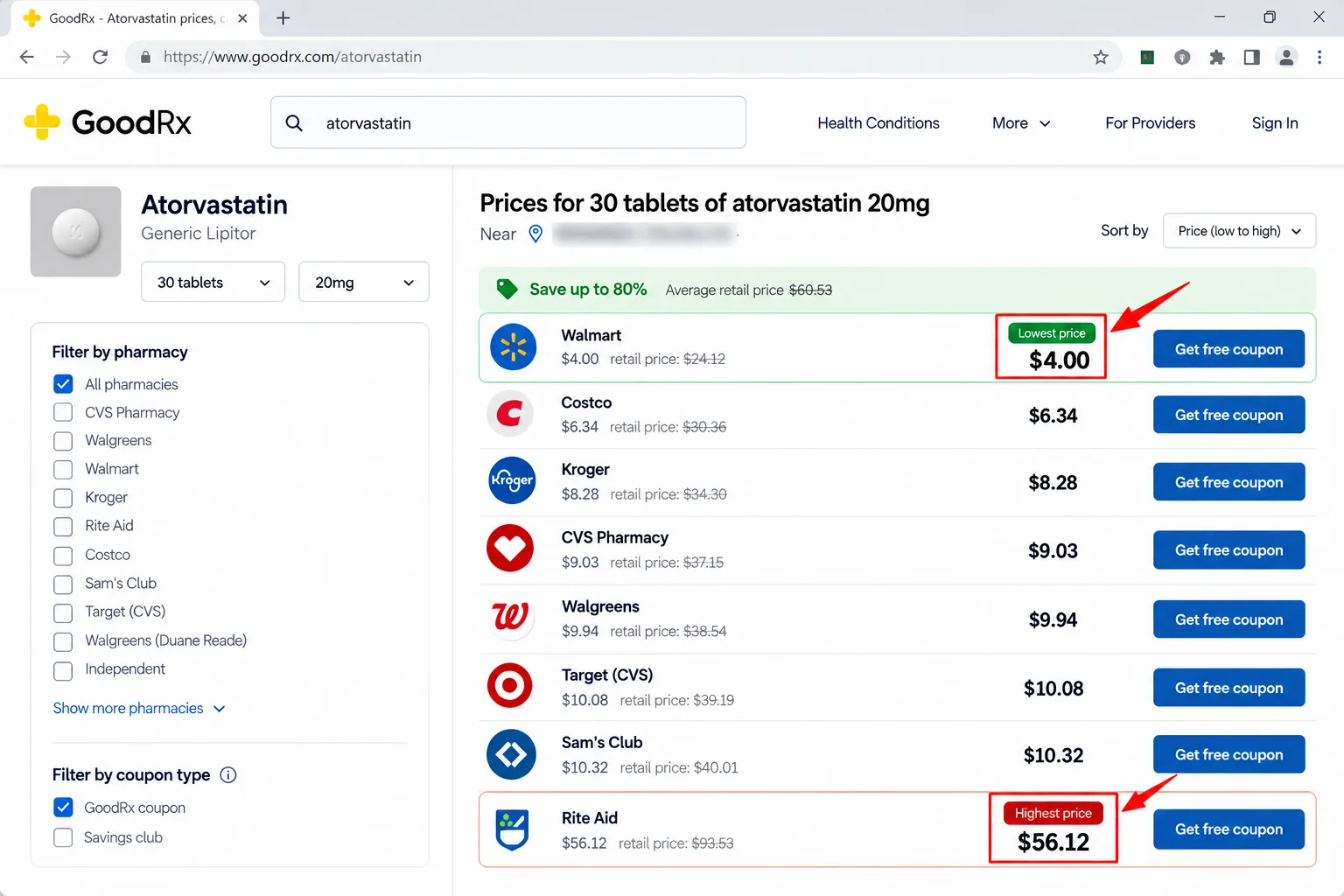
- What it is: a free app and website where you search a prescription, compare prices at nearby pharmacies and show a coupon. It states it isn't insurance and doesn't negotiate or set prices.
- How to use it: search the drug and dose, compare nearby prices, then show the coupon at the pharmacy.
- What you might save: GoodRx's own marketing page cites an average saving of $150 against cash prices across its core claims in 2022. It also says "up to 80%", which is a ceiling, not a typical result.
The catch: GoodRx's support page says a purchase isn't automatically counted toward your insurance deductible. Check whether your insurance copay is already lower, and ask the pharmacist to run both prices. And read the privacy terms: in 2023 the FTC said GoodRx shared users' health information with advertisers, and GoodRx agreed to a $1.5 million civil penalty.
Best for: people paying cash or facing a high deductible. Skip it if: your copay is already a few dollars, or you're uneasy sharing health searches. This is general information, not medical advice.
3. ENERGY STAR Rebate Finder
Verdict: A free lookup that can turn up money for products you were buying anyway.
- What it is: a tool where you enter your zip code to see rebates and special offers on ENERGY STAR certified products from its partners.
- How to use it: look it up before you buy an appliance, water heater or similar item, and open the individual offer.
- What you might save: it depends entirely on the offer. The finder page doesn't give amounts.
The catch: the page doesn't state eligibility rules or expiry dates, so read each offer before you buy. A rebate may need an application after purchase.
Best for: homeowners replacing appliances. Skip it if: you rent and don't buy big-ticket items.
4. Google price tracking
Verdict: The laziest way to wait for a lower price.
- What it is: Google's Track price feature alerts you when a product's price drops. Our guide to the price history checker shows how to tell a real sale from a fake one.
- How to use it: search a product while signed in, open its card, tap Track price, choose options and optionally set a target price.
- What you might save: nothing by itself. It tells you when to buy, and the saving is whatever the retailer drops.
The catch: Google's help page says it's available only in the US, Canada, Australia, Japan and India, and that prices can change at any time.
Best for: purchases you can wait on. Skip it if: you need the item this week.
5. Rakuten
Verdict: Easy cash back, but slow and small.
- What it is: a cash back site where you shop through its links or extension and earn a percentage back.
- How to use it: activate the offer before checkout. Our best cashback apps comparison shows how it stacks up against four others.
- What you might save: the percentage varies by store, so check the offer page.
The catch: Rakuten pays quarterly, on February 15, May 15, August 15 and November 15, with a $5.01 minimum, and says online and in-store purchases typically take 3 to 14 weeks to confirm. A balance of $5.00 or less rolls over.
Best for: planned online purchases. Skip it if: you want money this month.
6. Too Good To Go
Verdict: Cheap food with a lottery element.
- What it is: an app that lists unsold food from nearby shops and restaurants, which you reserve and pay for in the app. You collect it during the store's pickup window.
- How to use it: open the app, find a nearby store with bags available, reserve one and show the app at pickup.
- What you might save: the page says you pay roughly a third of the original retail price, while another line on its site says half price or less. Expect something between those.
The catch: the contents are a surprise, and the pages I opened don't explain refunds or cancellations. Check its terms before you reserve.

Best for: flexible eaters near several shops. Skip it if: you have allergies or a strict diet.
7. Freecycle
Verdict: The cheapest price on this list is zero.
- What it is: a network of local groups where people give away items. Freecycle's own guide says items are given, not sold.
- How to use it: sign up, join a town group near you and reply to a listing. Freecycle says to share your address only once the other person responds.
- What you might save: the full retail price of the item, minus your time and travel.
The catch: groups set their own rules, availability is hit and miss, and Freecycle warns that you should never pay for postage or delivery. That's a scam signal.

Best for: furniture, kids' items and decluttering swaps. Skip it if: you need a specific item by a date.
Which of these websites that save you money should you try first?
Choose based on the bill you're staring at:
- Choose IRS Free File if you file a US return and your income is under the limit.
- Choose GoodRx if you pay cash or a high deductible for a prescription.
- Choose ENERGY STAR's finder if you're buying an appliance or water heater soon.
- Choose Google price tracking if you're eyeing a gadget and can wait.
- Choose Rakuten if you shop online and don't mind waiting for payouts.
- Choose Too Good To Go or Freecycle if groceries or furniture are your pain point.
For more ways to cut checkout costs, see our guide on how to find hidden discounts online.
My take and next step
The best websites that save you money are the ones that hit a big bill once, not a small coupon often. My pick: start with IRS Free File or GoodRx, because each can replace a cost you'd otherwise pay in full. Skip this if: you only want a quick trick, in which case start with Google price tracking.
Next step: pick the one bill from this list that applies to you and check its site today. More ways to save are in the Money-Saving Guides hub.
Last checked: 14 October 2026, against the IRS, GoodRx, FTC, ENERGY STAR, Google, Rakuten, Too Good To Go and Freecycle pages. Prices, limits and offers change, so confirm them on each site.
Frequently asked questions
Is Free File still free if I use a partner's site?
The IRS says to start at IRS.gov/freefile, then follow a partner link, because that route ensures free access. Reaching a provider by search or an ad may lead to a paid product. Each partner also sets its own eligibility rules.
Are these sites only for US readers?
Mostly. Free File is for US federal taxes, and ENERGY STAR's finder asks for a zip code. Google's Track price works only in five countries. Check each site's availability for your location before you sign up.
Is Too Good To Go safe if I have a food allergy?
The pages I opened don't explain how allergens are handled, and bag contents are a surprise by design. If you have an allergy, read the app's terms and contact the store before you reserve. Skip it if you can't take the risk.
Quiz
10 Money-Saving Websites You Should Know
10 quick questions — think you know this one?
Test Your Knowledge →Comments (9)
- R
Riley
Oct 6, 2026
I really like the content on this website.
- C
Chris T.
Oct 4, 2026
Great information presented in a simple way.
- C
Chris T.
Sep 30, 2026
Great work by the team behind Perktonic.
- L
Lee K.
Sep 30, 2026
This article gave me a better understanding of the topic.
- J
Jamie
Sep 23, 2026
I enjoyed the article and found it easy to follow.
- R
Riley
Sep 18, 2026
I appreciate the clear writing and useful information.
- J
Jordan
Sep 17, 2026
Great article! I really enjoyed reading this.
- T
Taylor
Sep 17, 2026
Very informative and nicely written.
- A
Alex P.
Sep 11, 2026
Thanks to the writer for putting this together.