Fake Free Offers: 6 Red Flags to Spot in 30 Seconds
Spot fake free offers fast: six red flags, from card requests to lookalike domains, plus a 30-second check to run before you claim anything.

The giveaway looks perfect. The right logo, a believable prize, a countdown ticking in the corner. Then you glance at the web address and one letter is wrong.
That tiny detail is usually all it takes to unmask fake free offers, and it's rarely the only one. Below are six red flags, ranked by how reliably they signal trouble, plus a 30-second test you can run on any offer before you type a thing. I built it from the FTC's consumer advice and the UK National Cyber Security Centre's scam guidance, not from anyone's hunch.
Quick answer: A fake free offer usually gives itself away in one of six ways: it asks for a card number, fee or gift card, loops you through surveys, demands sensitive data, sits on a lookalike address, or counts down the clock. Check the web address and the ask before you click.

The 6 red flags of fake free offers, strongest first
Each flag below says what it is, how to check it in seconds, and where it can mislead you. Real offers can trip one of these now and then, so the answer is the pattern, not a single signal.
1. A card number for something "free"
Verdict: The classic. If a free offer wants payment details, it isn't free.
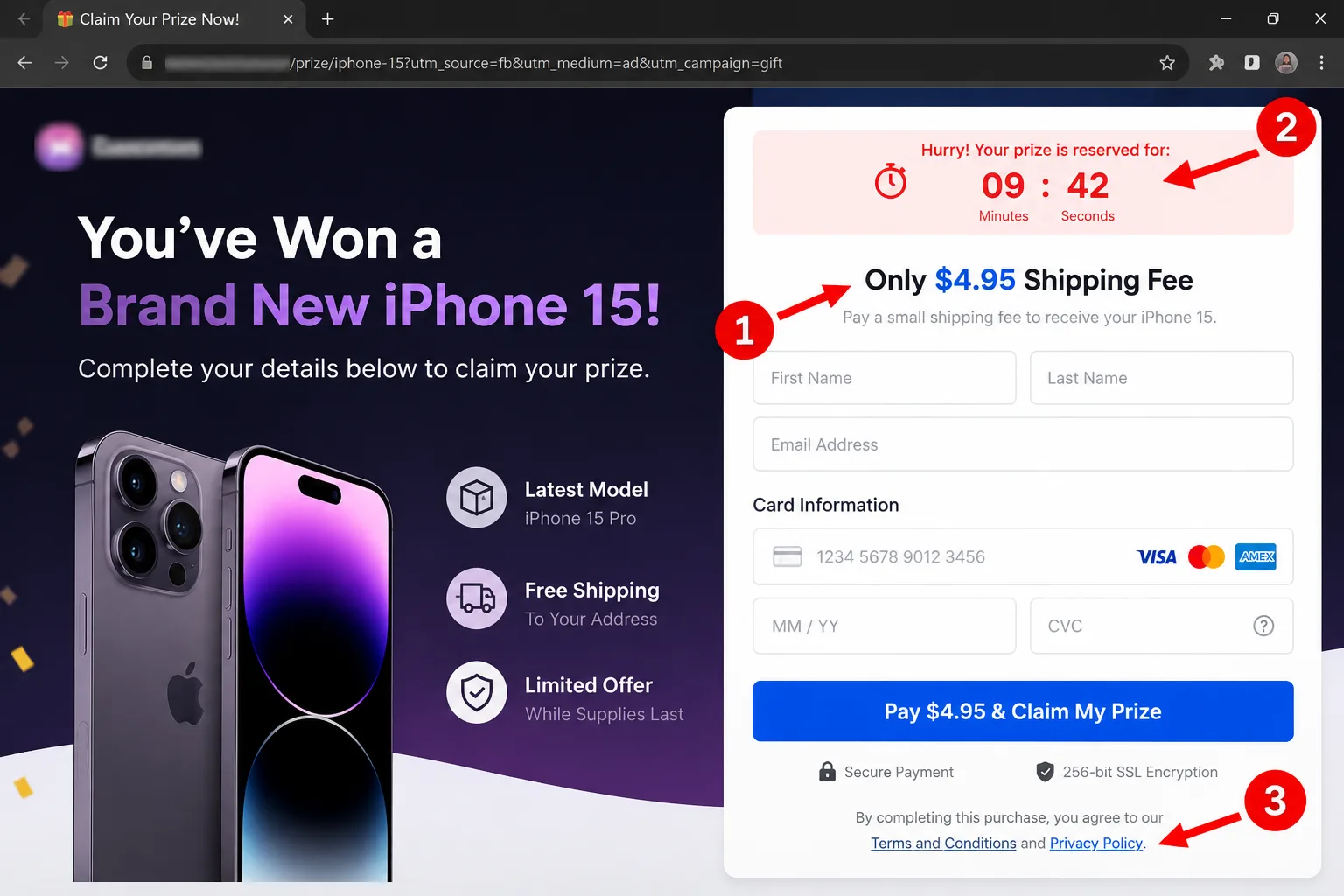
What it is: A "free trial" or "free sample" where you only pay shipping. The small fee is how the page gets your card.
How to check: Find the terms and the cancel route before checkout, and watch for pre-ticked boxes. In one case the FTC describes, "risk free" trials advertised for shipping only ran up charges of as much as $98.71 for the first shipment and for each monthly shipment after it. A button that appeared after checkout added extra products and a membership.
The catch: A genuine subscription trial may also ask for a card, but it states the price and cancellation up front. A sample shouldn't need one at all.
Who it catches: Shoppers in a hurry, especially anyone checking out on a phone.
2. A fee, "tax" or gift card to claim your prize
Verdict: An instant no. Free doesn't come with a bill.
What it is: "You've won!" or a "free gift card", followed by a charge for taxes, shipping or processing, or a request to buy gift cards and read out the codes. This is the free gift card scam in its usual costume.
How to check: Ask two questions: did I enter, and what do I have to pay? The FTC says legitimate sweepstakes don't charge fees for taxes, shipping or processing to release a prize. It also says anyone who demands payment by gift card is a scammer.
The catch: Money sent this way is hard to recover. The FTC's advice is to report it to the gift card company right away, then to the FTC.
Who it catches: People who think they've won something. Legitimate routes exist, and our guide on how to get free gift cards covers them.
3. The survey loop
Verdict: A bad sign when the reward never appears.
What it is: A page promising a sample or gift card that sends you through questions, then partner offers, then more questions. The product keeps receding while your data piles up.
How to check: Count the screens. If you've answered several and still haven't seen the product, an address field or the terms, close the tab.
The catch: Some legitimate programs do ask for feedback once a sample arrives. The difference is that they say so up front. Our guide to free samples by mail flags which ones.
Who it catches: Bargain hunters arriving from social ads.
4. A form that asks for too much
Verdict: A sample needs an address, not your identity.
What it is: Forms that request a Social Security number, bank login, ID photo or other details that open accounts. The FTC lists "a coupon for free stuff" among the hooks used in phishing messages.
How to check: List what the form asks. A real sample request typically needs a name and a mailing address, perhaps an email. A password, bank number or ID is never part of it.
The catch: Even harmless-looking fields like a phone number can land you on marketing lists. Use a spare email address for freebies.
Who it catches: Anyone filling a form fast, usually on mobile.
5. A lookalike address
Verdict: Check the address before the design. Designs are easy to copy.
What it is: A page that borrows a brand's look but sits on a different domain, with extra words, swapped letters or an odd ending. These are the free sample scams that look most convincing.
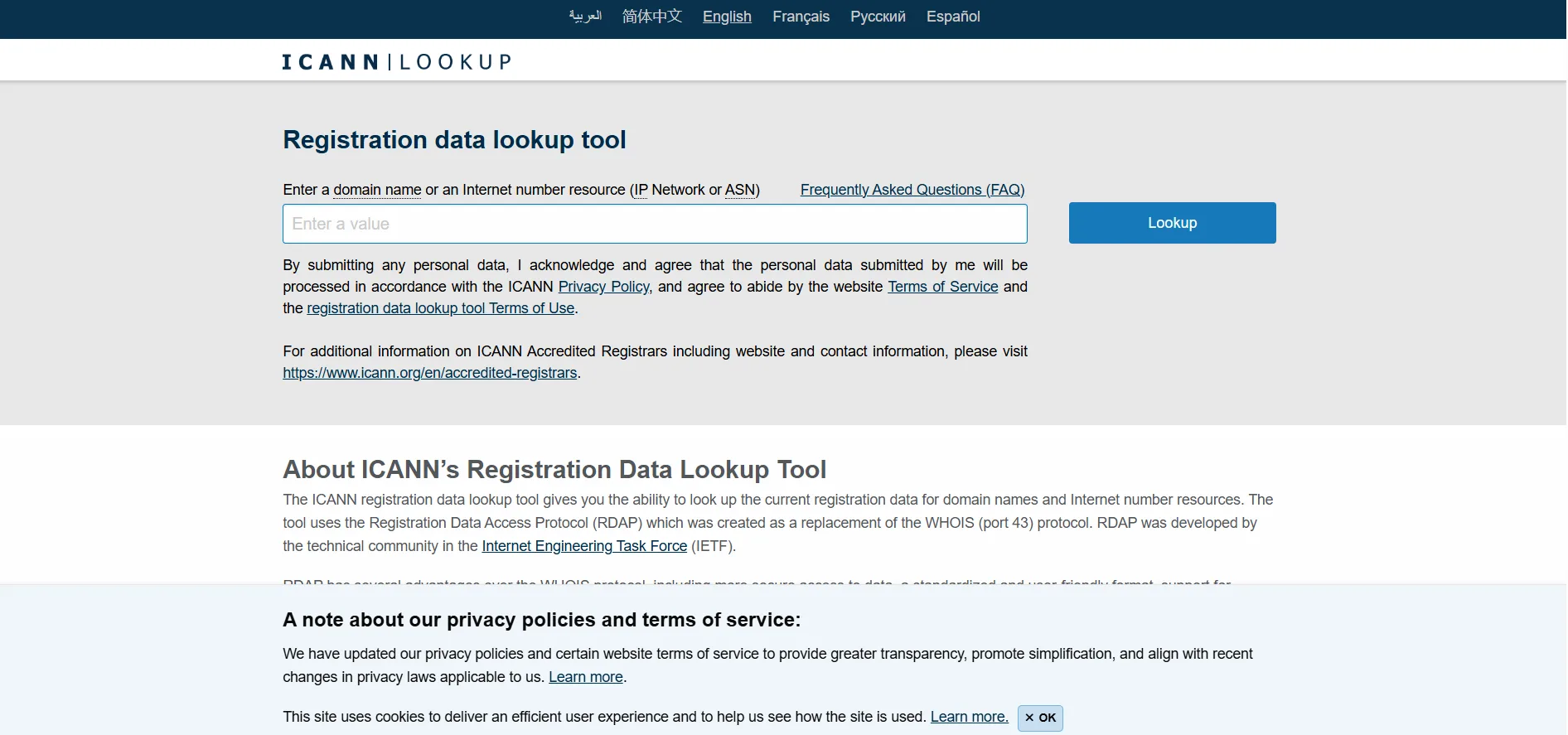
How to check: Type the brand's own address yourself and compare. You can also run the suspicious domain through ICANN's registration lookup. An "official" giveaway domain registered only days ago is a flag, though not proof.
The catch: Privacy services can hide the owner, and genuine new brands have new domains too. Treat the result as a clue.
Who it catches: Anyone who arrives from an ad, text or message instead of typing the address.
6. Pressure and fake scarcity
Verdict: Urgency is a tell, not a feature.
What it is: Countdown timers, "only 3 left" banners and "claim within 10 minutes" prompts. The FTC says scammers rush you so you don't have time to think or talk to someone you trust.
How to check: Close the tab and go to the brand's own site. If the offer is real, it will still be there.
The catch: Real promotions have real deadlines too. What separates them is that you can confirm the deadline on the brand's own pages.
Who it catches: Anyone scrolling a feed on autopilot.
What's the 30-second test for any free offer?
Run these in order. The first four take about half a minute.
Read the address bar (5 seconds). Does it match the brand's own site, letter for letter?
Check what it asks (5 seconds). A card, a fee, a gift card, an ID number or a password means stop.
Find the terms and the cancel route (10 seconds). No terms, or no clear way out, means walk away.
Search the offer plus "scam" or "complaint" (10 seconds). That's the FTC's own tip.
If it passes, confirm it on the brand's own site. Type the address yourself. If the brand never mentions the offer, treat it as fake.
What if you've already clicked or paid?
Gave a card number: call your card issuer, ask about the charges and read your statements closely.
Shared a Social Security, bank or card number: the FTC points to IdentityTheft.gov for step-by-step instructions based on what you shared.
Clicked a link or opened a file: update your security software, run a scan and remove anything it flags.
Paid with gift cards: contact the gift card company right away, then report it to the FTC.
Report it: US readers can use ReportFraud.ftc.gov. UK readers can follow the NCSC's guidance on reporting scam emails, texts, websites and adverts.
My take and next step
The fastest defence against fake free offers is a habit, not software: read the address, then read the ask. Most scams fail one of those two checks before you've scrolled.
My pick: run the 30-second test on anything that reaches you through an ad, a text or a message. Skip this if you typed the brand's own address yourself and the offer asks for nothing but a mailing address. For options that pass, see our guide to free sample boxes or head to the free samples and products hub.
FTC and NCSC guidance checked on October 11, 2026. Scam tactics change quickly, so treat the checklist as a habit rather than a guarantee.
Frequently asked questions
Does a padlock or "https" mean the offer is safe?
No. The padlock means the connection is encrypted, not that the site is honest. Scam pages can use it too. Judge the offer by the address, what it asks for and whether the brand's own site mentions it.
Can an ad in my social feed still be a scam?
Yes. The FTC has warned that social platforms don't always thoroughly vet ads or the advertisers behind them. An ad appearing in your feed isn't a safety check, so run the 30-second test on the offer itself.
Are free gift card offers ever real?
Some rewards programs do pay out in gift cards, but you earn them over time, and none should ask you to pay a fee or hand over card codes to release one. Anything that does is the second red flag above.
What's the difference between a fake offer and a legit one that wants feedback?
A legitimate program tells you up front what it expects, such as a short review, and never charges you. A fake one hides the ask, keeps moving the goalposts or wants payment. Read the terms before you apply.
Quiz
Can You Spot a Fake Free Offer?
10 quick questions — think you know this one?
Test Your Knowledge →Comments (5)

Ted Hunter
Oct 8, 2026
I’ll definitely recommend Perktonic to others.

Logan Thompson
Oct 4, 2026
This is a helpful website with some interesting content.

Rushil Kulkarni
Sep 26, 2026
I found some great tips here. Thanks!

Luenem da Luz
Sep 17, 2026
This article was easy to read and understand.

Archie Wang
Sep 10, 2026
Thanks for providing readers with such helpful information.