Free Baby Samples: What's Real and What Costs Your Data
Free baby samples exist, but many sign-ups trade your due date for coupons. See 6 real routes, what each takes from you, and what to skip first.
Your newborn goes through diapers faster than your budget does. Around week three you're doing sums at 3am.
This guide covers free baby samples and other real help, what each route asks you to hand over, and which sign-ups mostly trade your due date for coupons. I haven't signed up for these myself. I read each organization's own pages on 14 October 2026, and they are US versions. Offers change often, so confirm on the official page.
Quick answer: Real free baby samples are rarer than the ads suggest. The most dependable help is a diaper bank and WIC, then an insurer-covered breast pump. Brand programs and registry kits offer samples or coupons, but they take your due date and email. Ask your pediatrician before changing formula.
What do free baby samples cost you?
A due date and an address are valuable to marketers. They tell a company when you'll need diapers, wipes and formula, which is why so many offers ask for them. Each route below gets a "What you give up" line, so you can decide before you type.
Here's how I'd treat any form:
- Use a separate email. One you can abandon if the offers pile up.
- Give the least you can. Skip optional surveys about your baby.
- Read the sharing line. Some programs say offers may come from affiliated brands.
- Refuse any card for "free". If shipping needs a card, it may be a paid trial. Our fake free offers checklist shows the signs.
For the bigger picture, see why companies give free samples.
The catch: I can't tell you what any company does with your data once you submit it. Read its privacy policy, and don't assume a "free" label means free of strings.
6 routes to free baby stuff, from strongest to weakest
1. Diaper banks and 2-1-1
- Verdict: the most direct way to get actual diapers, and where I'd start if you're running low.
- What it is: the National Diaper Bank Network says to call 2-1-1 or search online for diapers, basic needs or children's listings, and to check its member directory for a diaper bank in your community.
- How to claim it: call 2-1-1, ask for diaper assistance, then ask the agency about its rules. If nothing turns up, the page suggests trying faith-based organizations and food pantries.
- What you give up: whatever the local agency asks for. The page doesn't say, so ask what they collect.
- The catch: the page lists no eligibility rules, sign-up steps or how often you can receive diapers. Supply and sizes vary by place.
- Best for: families short of diapers right now.
2. WIC
- Verdict: real, lasting help with food, if you're income-eligible.
- What it is: USDA's WIC page says pregnant, postpartum and breastfeeding women, infants and children up to their fifth birthday can qualify. Medicaid, SNAP or TANF participants may already meet the income test.
- How to claim it: apply through a WIC agency in your area. The page says there may be online options and points to a WIC Eligibility Tool.
- What you give up: household income details and a free health check by WIC staff before you're enrolled.
- The catch: income limits depend on household size and your state, and the table didn't load for me. WIC isn't a sample, and benefits are tailored to you.
- Best for: income-eligible families who want food support through pregnancy and infancy.
3. A breast pump through your insurance
- Verdict: a free baby product that many parents never ask about.
- What it is: HealthCare.gov says most Marketplace plans must provide breastfeeding equipment and counseling, and the plan must cover the cost of a pump, either rented or yours to keep. The same rule covers other health plans, except grandfathered ones.
- How to claim it: call your insurer and ask how it covers pumps. Then talk to your doctor, since the page says the choice is shared.
- What you give up: paperwork. Some plans may require prior approval.
- The catch: plans can set rules on manual or electric, rental length and timing, so "covered" doesn't mean the model you want.
- Best for: parents who plan to pump and have health insurance.
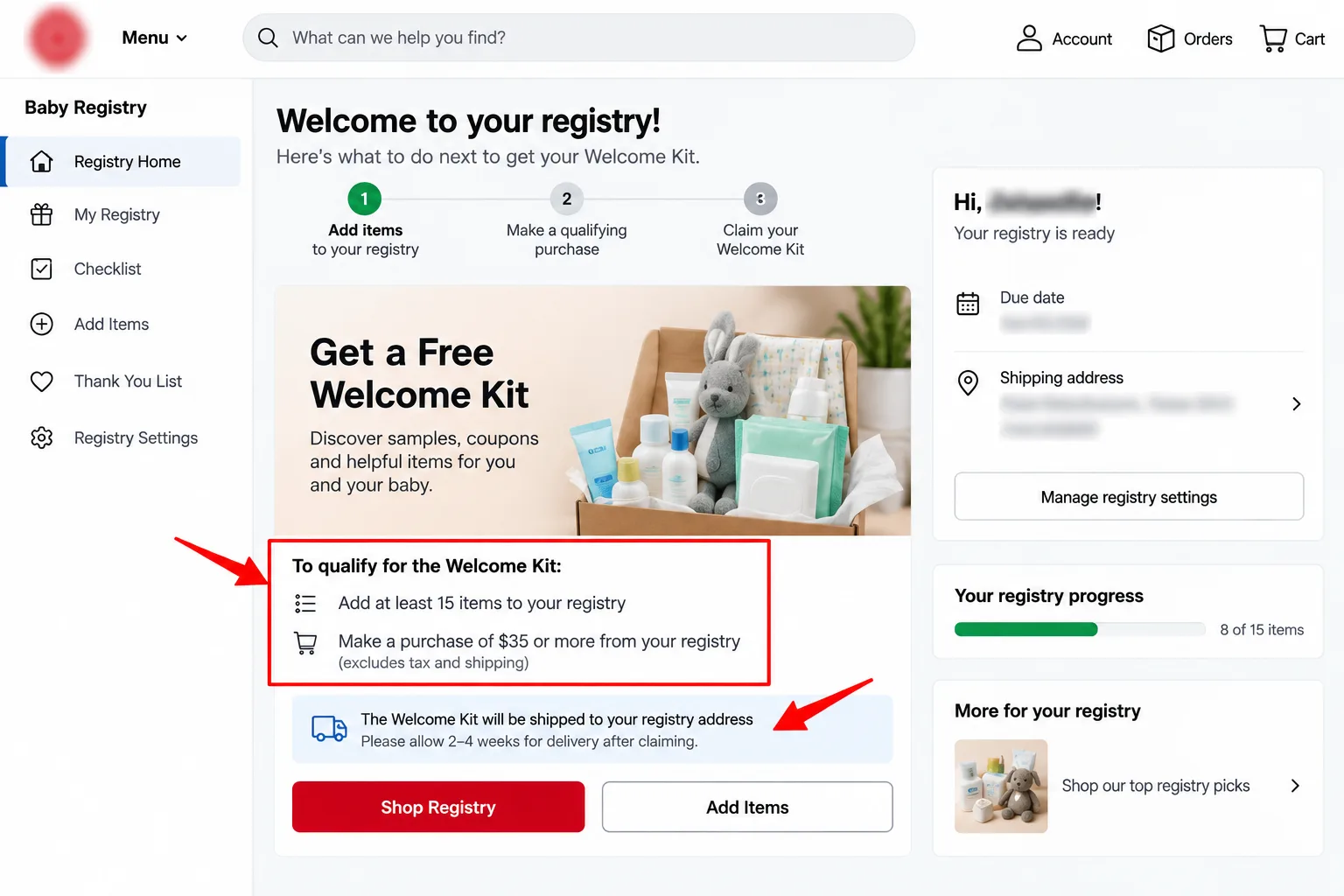
4. Registry welcome kits
- Verdict: a box of samples, but you earn it with a purchase.
- What it is: Target's help page says its Baby Registry Welcome Kit is a mix of samples and a Target Circle Bonus, valued at $100.
- How to claim it: create a registry, join Target Circle, add 10 unique items and buy more than $10 from the registry, by you or by others. Allow 24 to 48 hours for the bonus to appear.
- What you give up: a registry and a Circle account, which means a profile of what you buy.
- The catch: shipping and handling fees apply. The limit is one kit per year, the page doesn't list the contents, and I couldn't open Amazon's own welcome box page, so check it directly.
- Best for: parents who will register and shop there anyway.
5. Formula-maker programs
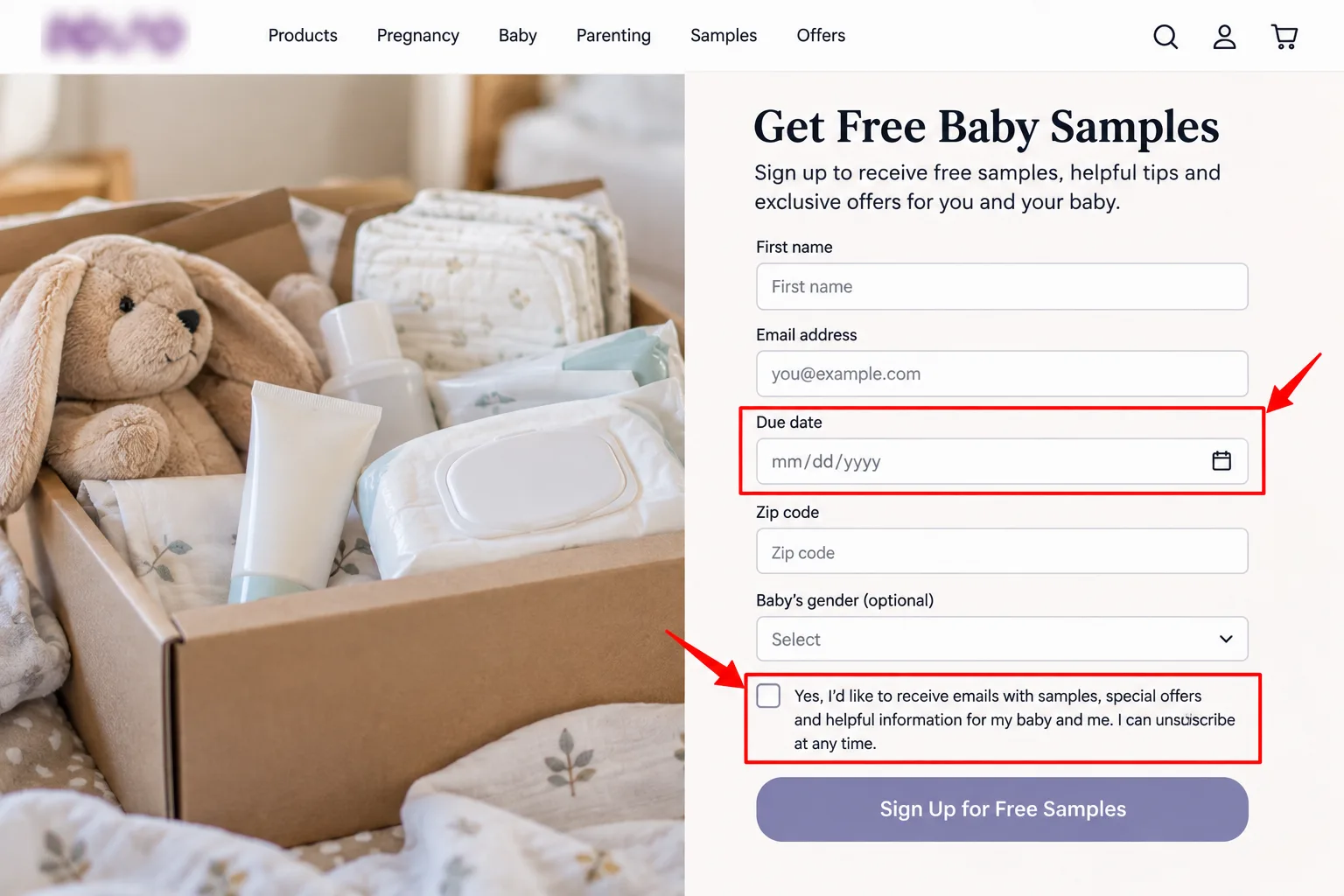
- Verdict: samples and coupons, in exchange for the most personal data of any route.
- What it is: Enfamil's page says members of Enfamil Family Beginnings may be eligible to receive free formula samples. Similac's rewards page says you may also get samples in your welcome kit.
- How to claim it: join on the brand's site. Enfamil's page asks for first and last name, email, and due date or birth date, and I saw no home address field.
- What you give up: your email and baby's due date, plus a yes to offers. Enfamil says joining means agreeing to communications that may include affiliated brands.
- The catch: "may be eligible" is not a promise. Similac says some offers may need a visit to participating healthcare facilities, and I couldn't see what its sign-up asks for. Coupons are not samples.
- Best for: parents who already know they'll use formula and want to try a brand.
6. Diaper rewards programs
- Verdict: a loyalty scheme, not a sample, and the last on my list.
- What it is: Pampers' terms say members earn $10 of Pampers Cash for every 10 diaper codes scanned. Its support page says points can be redeemed for coupons or products.
- How to claim it: register in the app, buy diapers and scan the codes.
- What you give up: first name, email, password, postal code and your child's birthday or due date. Surveys are optional and may cover your child's information.
- The catch: you buy first. The terms say Pampers Cash expires six months after it's added, accounts can be cancelled after six months of inactivity, and the program can end at any time. I couldn't confirm any free diaper sample on the pages I read.
- Best for: parents already buying that brand every week.
What about hospital bags and your pediatrician?
Don't count on a formula sample from the hospital. Baby-Friendly USA's page on the International Code says hospitals shouldn't give families free samples of infant formula or promote formula through health care facilities. I couldn't verify what any given hospital or pediatric office hands out, so ask yours.
A pediatrician's office is still the right place to ask which brands they recommend for your baby. Similac's page even says some offers may need a visit to a healthcare facility. Treat that as a reason to ask, not a promise.
What's the safety note for formula and feeding products?
This is general information, not medical advice. Ask your pediatrician before you change formula or feeding products, and especially for a premature baby. The FDA says to contact your health care provider if you have concerns, never to feed a baby homemade formula, and not to feed formula past its use-by date.
Free doesn't mean checked. Be wary of opened tins or loose formula offered through a swap or a neighbor. A sealed sample from the maker is a different thing. For secondhand gear and bulky items, our buy nothing group guide covers how to ask and stay safe.
My take and next step
There's no shortage of offers for free baby samples, but there's a shortage of ones that don't cost something. My pick: start with 2-1-1 and WIC if money is tight, then ask your insurer about a pump. Add one brand program at most, on a spare email. Skip this if: a form wants your card for "just shipping", or you're not sure which formula your baby needs.
Next step: call 2-1-1 or check WIC eligibility today, then ask your insurer about a pump. More ways to get things at no cost are in our guide to free samples by mail and the Free Samples & Products hub.
Last checked: 14 October 2026, against the National Diaper Bank Network, USDA, HealthCare.gov, Target, Enfamil, Similac, Pampers, Baby-Friendly USA and FDA pages named above. Offers and rules change, so confirm them on each official page.
Frequently asked questions
Can I get free baby stuff without a credit card?
Yes. Diaper banks, WIC and insurance-covered pumps don't ask for a card. Brand sign-ups I read asked for an email and a due date, not a card. If any offer wants card details to cover shipping, treat it as a paid trial.
When should I sign up for baby samples?
There's no official timing rule on the pages I read. Enfamil's form takes a due date or birth date, and Target's kit needs an active registry, so some programs start before the birth. Sign up only for the ones you'd use.
Can I stop the emails afterwards?
Usually, with an unsubscribe link, but I haven't tested each program. Pampers' terms refer you to its privacy policy for how your information is used. Use a spare email so you can drop the account without losing anything important.
Quiz
Free Baby Samples: Save on Your Baby Essentials
10 quick questions — think you know this one?
Test Your Knowledge →Comments (6)
- A
Alex P.
6 days ago
A simple, clear, and informative article. Great job!
- J
Jordan
Oct 8, 2026
Thanks to the whole Perktonic team for the useful content.
- J
Jess
Oct 6, 2026
Great information presented in a simple way.
- J
Jamie
Oct 2, 2026
Great explanation. Thanks for the effort!
- D
Dana
Sep 26, 2026
I’ll be coming back for more useful content.
- C
Chris T.
Sep 25, 2026
I enjoyed this post and learned something along the way.